❖ ❖ ❖
The Bottle That Knew Too Much
Sculptor, muse, grape harvest, Banyuls, Odessa, and the improbable geometry of coincidence.
Scyfion Royal Brackla 2007 — Banyuls Cask Finish
There is a particular kind of evening that only happens in Odessa. It begins with whisky tasting. It ends with a conversation about history, borders, or the strange way certain lives echo and resonate across time and geographical distances, before focus comes back to merits of Single Malt Scotch in everyone’s glass.
This is the story of one such evening, and of a bottle that had it arrived at the table any later might have been taken for a prop in someone’s very elaborate joke.
The Bottle
Pick up a bottle of Scyfion Royal Brackla 2007 Banyuls Wine Cask Finish, and you are holding Single Malt Scotch with a very complicated history.
The distillery: Royal Brackla, founded in 1812 in the Scottish Highlands, the first in Scotland to receive a Royal Warrant, bestowed by King William IV. “The King’s Own Whisky,” a title the house had carried with unhurried confidence for nearly two centuries.
The cask: Banyuls, a fortified Vin Doux Naturel from France’s southernmost coast, just north of the Spanish border — Grenache-dominant, oxidatively aged, made by the same method as Port. Its sweetness halted by the addition of eau-de-vie. A cask that smells, if you lean close enough, of garrigue, salt air, and whatever promise the Mediterranean has always held in reserve.
The bottler: Scyfion — an independent Odessa project conceived in the back room of the Corvin pub by Ruslan Zamoskovny, one of Ukraine’s most decorated whisky experts. Its philosophy is so exact that it verges on a manifesto. The name fuses Scythian (for Ukraine’s ancient steppe civilization) with fion (Gaelic for wine).
The specs: 46% ABV. 150 bottles. Distilled in 2007. Bottled in 2019. Non-chill filtered. Natural colour.
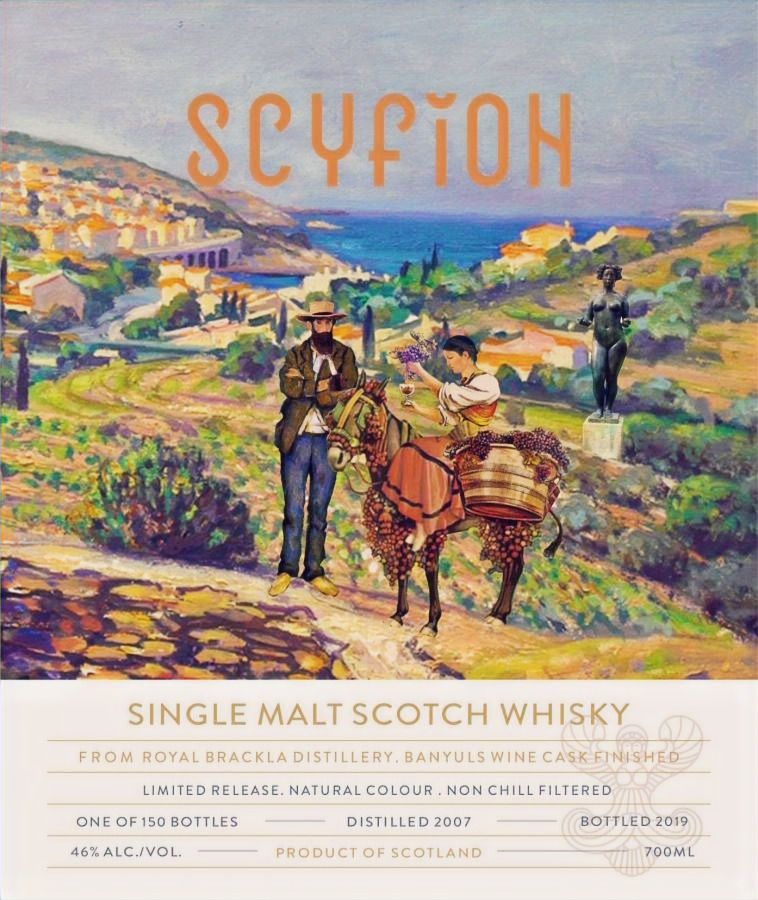
Each label carries a historical painting tied to the cask’s region of origin. Every release is a small, but a deliberate geography lesson.
Look closely at the label. In the hills above Banyuls-sur-Mer, rendered in warm ochres and Provençal greens, a bearded man stands contemplatively. Besides him, a young woman sits atop a donkey laden with grapes, offering him a glass. In the background, rising above the terraced vineyards and the glinting sea, stands a bronze female figure — serene, classical, immovable.

The bearded man is Aristide Maillol.
The woman is Dina Vierny.
The sculpture was made by him.
This is where the coincidences begin.
The Sculptor and His Muse
Aristide Maillol was born in Banyuls-sur-Mer in 1861 and died in 1944, in a car crash during a thunderstorm, at the age eighty-two. During his life, he became one of the defining sculptors of modernity, a late convert to stone and bronze, who nevertheless produced figures of such monumental calm that critics reached automatically for comparisons with antiquity.
His home and studio, steeped in Mediterranean light and hemmed by vineyards, are now a museum. The sculptors’ final resting place is in the house garden. The town square bears his name.
In 1934, at the age of seventy-three, Malliol was introduced to a fifteen-year-old girl named Dina Aibinder. He wrote: “Mademoiselle, I am told that you resemble a Maillol or a Renoir. I will be happy if it’s a Renoir.” It was a Maillol.
For the last decade of his life, she was his muse, his model, and many insist, the revitalizing force behind his late masterpieces. She posed for The Mountain, The River, The Air, and the unfinished Harmony, which was still on his easel when he passed away.
Dina Vierny, as she later became known, was born in the old Bessarabian province, a region culturally entwined with Odessa.
During the Nazi occupation she became something of a legend as a courier for the French Resistance, she guided fugitives, refugees, and Allied airmen across the treacherous Pyrenean passes above Banyuls. The very paths she once walked as Maillol’s model, until her arrest by the Gestapo. She survived. She returned. She kept going.
In Paris, she became a phenomenon: a gallery owner, a collector, a fierce advocate for dissident art.
In 1995, she founded the Musée Maillol in Paris. She donated eighteen of his sculptures to the Jardin des Tuileries.
Dina Vierny passed away in 2009, five days before her ninetieth birthday.
The Evening Before the War in Iran
On Friday, February 28, 2026, twelve people gathered in the cellar beneath one of the Odessa’s oldest restaurants for the monthly meeting of the César Autonne Cigar Club. The vaulted ceiling was early 19th-century brick.
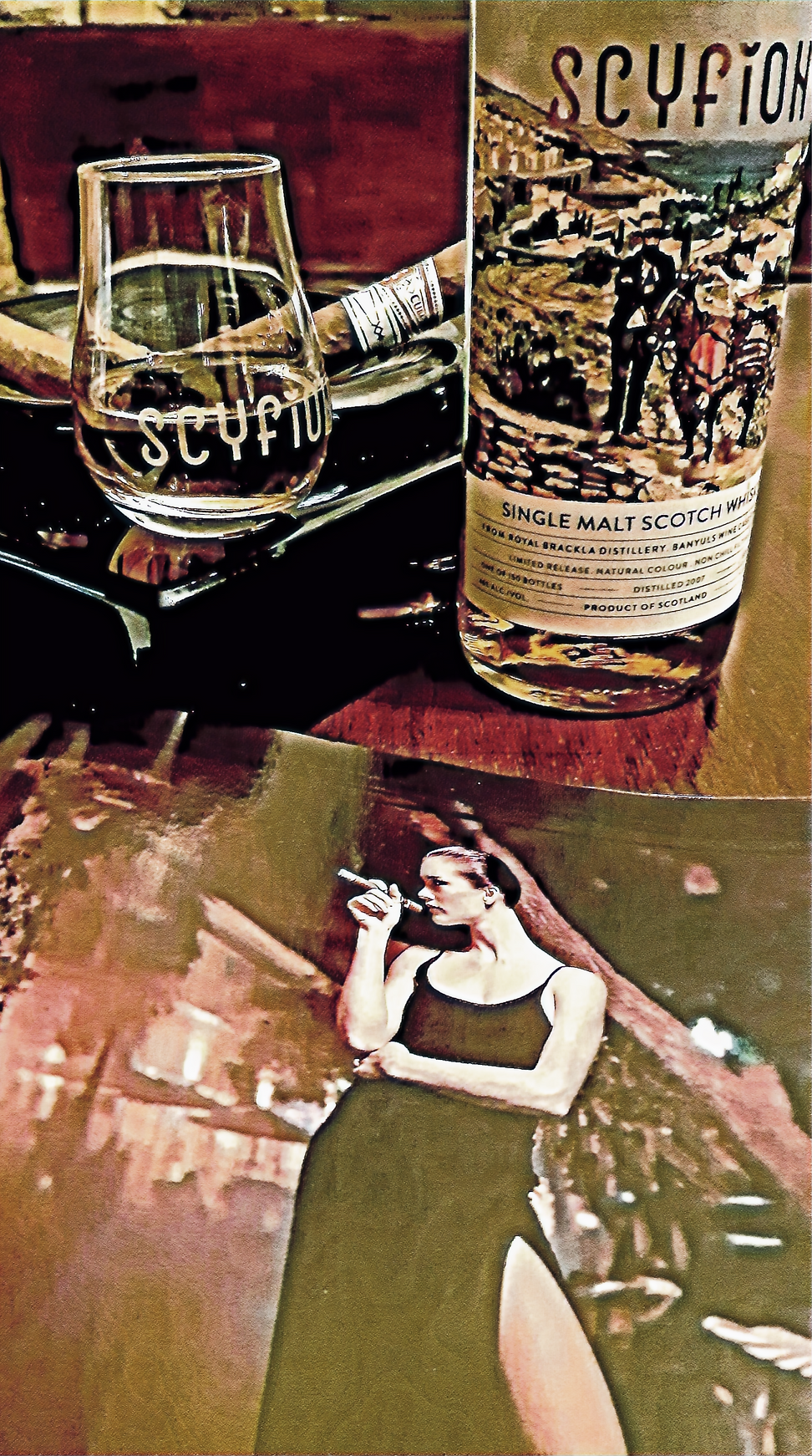
The cigars — Ashton Heritage, Cohiba, Diamond Crown, Gurkha, Zino, burned with the slow authority of things that have nothing left to prove.
Around the table, along with club regulars sat professors of English, Odessa entrepreneurs, professor of medicine from London Medical School, and professor of macroeconomics from the Polytechnic University. Among them was a Frenchman, who had never found a convincing argument for leaving Odessa. Italian gentleman whose Milanese-accented Russian made everyone inexplicably happy, and a guy from Luxembourg, a country smaller in population than Odessa, but with a GDP that produced delicate silences in the macroeconomists.
The conversation drifted from war, its possible endings, what peece might resemble, to who will rebuild the city, when rebuilding resumes. Plans emerged with the serene confidence of people who have decided the future exists and intend to populate it.
The air attack sirens did not go on that evening. Odessa, on rare nights, permits itself such courtesies.
One Month Later
On April 18, 2026, six Scyfion releases were presented by Ruslan Zamoskovny, the project’s co-founder. The Royal Brackla 2007 Banyuls was opened first and examined with care.
The painting, the cask, the wine region, the sculptor, the muse — all of it entered the room in a single, quiet moment, acquiring the particular gravity that objects possess when they arrive exactly on time.
The Thread
Maillol was born in Banyuls. Vierny was born in the cultural orbit of Odessa. Maillol died in Banyuls. Scyfion is an Odessa project. The cask was used to aged Banyuls wine. The label shows both muse and sculptor, in the vineyards above the very town where the cask was born. The whisky was tasted in Odessa.
On Cigars, Whisky, and the Rooms That Hold Both
Cigars and single malt whisky have always kept company, not merely for chemical reasons, though chemistry does help.
The tannic smoke of a well-made cigar softens the paraffin edge, that even Serge Valentin once noted in this bottle. Drawing out what he called its “smooth and raisiny” heart.
However, the deeper kinship is structural. Both require patience. Both reward attention. Both carry the visible geology of time.
In fine cigars tobacco leaves have to be fermented and aged. Rolled by hands by cfartsmen whose skills are measured in decades. Whisky resting in wood that lived a previous life, donating its memory.
Neither can be rushed. Neither forgives indifference.
Coda
The ash, as noted in the dispatch from that February evening, held long. As good things and stubborn cities sometimes do.
The Scyfion Royal Brackla 2007 Banyuls Wine Cask Finish is one of 150 bottles. Most, by now, have surely been opened.
A few remain, waiting for the right room, the right company, and the right moment.
When it happens, study the label.
The bearded man in the wide-brimmed hat.
The woman on the donkey with grapes.
The bronze figure rising in the Mediterranean light above the vineyards of Banyuls.
These were real people.
One further note for those who track such things. The club that opened this bottle has a project of the REVA Foundation, built around the urban artworks of Mikhail Reva whose monumentals have stood in this city's squares and parks for three decades. Maillol made the south of France inseparable from his figures. Reva has done the same for the north shore of the Black Sea.
Their lives intersected in a place that produced wine that was aged in a cask, personal story that inspirited a label on Single Malt Scotch that found its way to Odessa.
April 2026, Odessa